

What Can Soft Matter Do? Exploring a Rising Field in Science
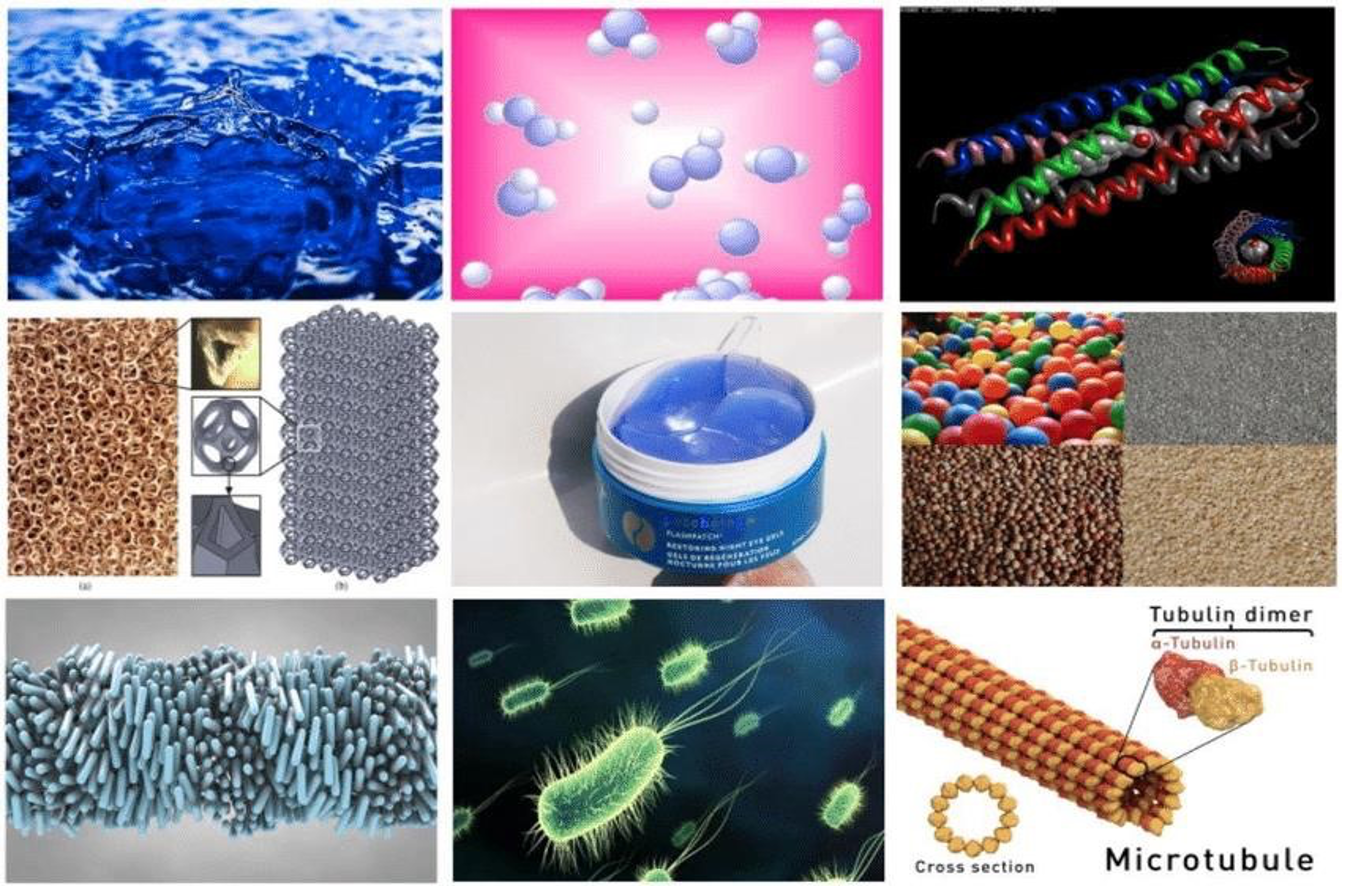
Soft matter is an increasingly important field at the intersection of physics, chemistry, materials science, and biology. Unlike traditional materials studied in solid mechanics, soft matter is characterized by its ability to deform or change structure easily. This distinctive property makes it highly versatile, with applications ranging from drug delivery to alcoholic beverages.
From ResearchGate by Yen-Chen at researchgate.net
Examples of soft matter include colloids, polymers, foams, gels, liquid crystals, and various biological substances. These materials are part of our everyday lives—such as the gels in skincare products, LCDs in televisions, or the polymers in plastics. Yet beyond their familiar appearances, soft matter systems exhibit complex behaviors that scientists are still working to fully understand. As a relatively young discipline compared to classical mechanics or solid-state physics, soft matter is rapidly gaining prominence in both academic research and industrial applications.
At the University of Puerto Rico in Mayagüez, our research group—led by Professor Ubaldo M. Córdova-Figueroa—has made important contributions to the understanding and development of soft matter. Our work addresses both fundamental scientific questions and practical challenges, with the broader goal of building a healthier and more sustainable world.
Our team has helped advance the frontiers of soft matter science through innovations such as AI-driven material discovery, controlled self-assembly, hybrid liquid crystal devices, and advanced colloidal gels. Despite this progress, we continue to face challenges, including the behavior of colloidal gels, Janus magnetic particles, and the simulation and modeling of liquid crystal droplets. With many group members coming from mechanical engineering backgrounds, we have also invested time in learning chemistry and nanoscale physics to better understand the molecular-level processes involved.
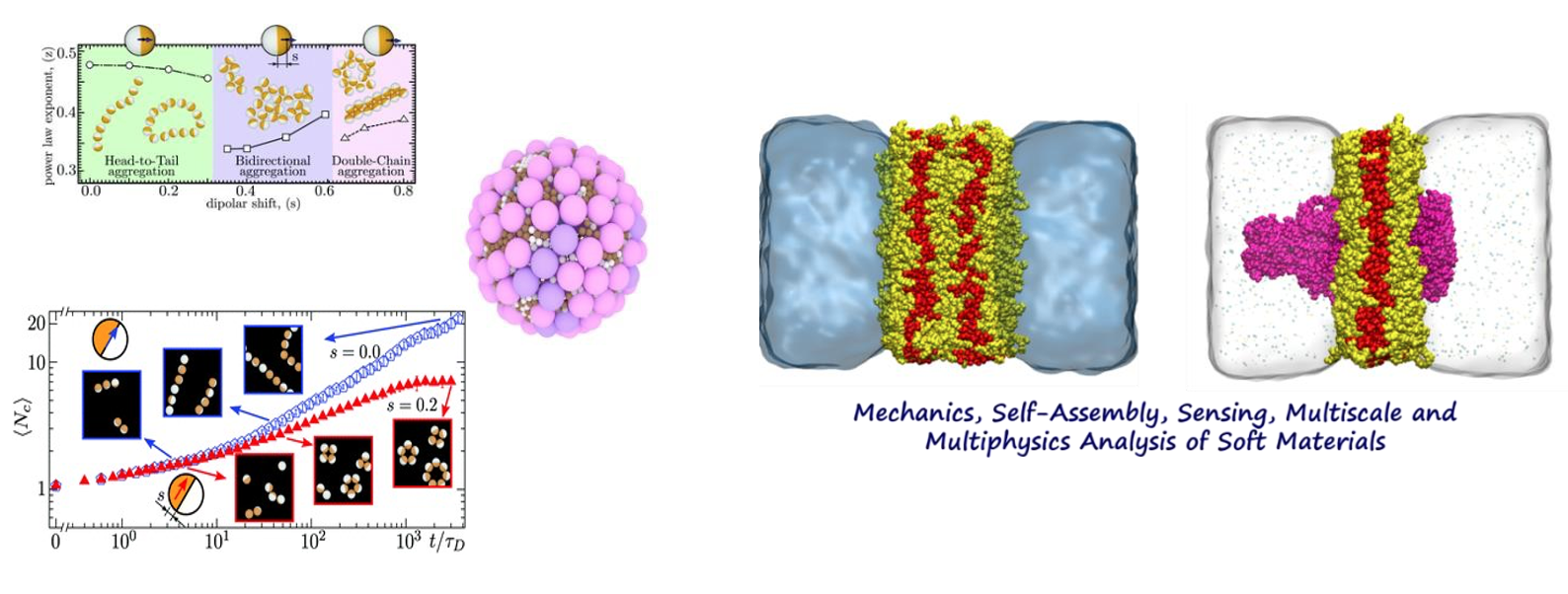
1.. From Journal: Soft Matter at pubs.rsc.org 2. From Jornal: Sot Matter at pubs.rsc.org 3. From Tufts University at sites.tufts.edu 4. From Multiscale Nano Group at sites.utexas.edu
Through this interdisciplinary approach, our group has contributed to the broader scientific effort to develop smarter, more efficient materials, shorten the development time for critical technologies, and promote greener manufacturing methods. In industry, our research has had impacts in healthcare—such as targeted drug delivery, cancer treatment, medical imaging, and tissue engineering—as well as in manufacturing, robotics, and environmental engineering, through advancements in soft robotics, 3D printing, smart materials, pollution cleanup, water filtration, and green chemistry.
While soft matter has already shown promise across a wide range of applications, it remains a young and evolving field. There is still much to discover, explore, and apply. From smarter sensors and medical innovations to sustainable materials and environmental solutions, the possibilities are vast. Continued research is essential for unlocking new technologies and solutions.