

The Everyday Uses of Liquid Crystals: A Window into Soft Matter Innovation
Liquid crystals are fascinating materials that play a key role in modern technology, even though many people may not realize it. As part of the broader category of soft matter, liquid crystals have properties that fall between those of conventional liquids (like water) and solid crystals. Their unique behavior allows them to flow like a liquid while retaining some of the ordered structure of a crystal. Because of these characteristics, they can respond impressively to changes in temperature, pressure, and electric fields.
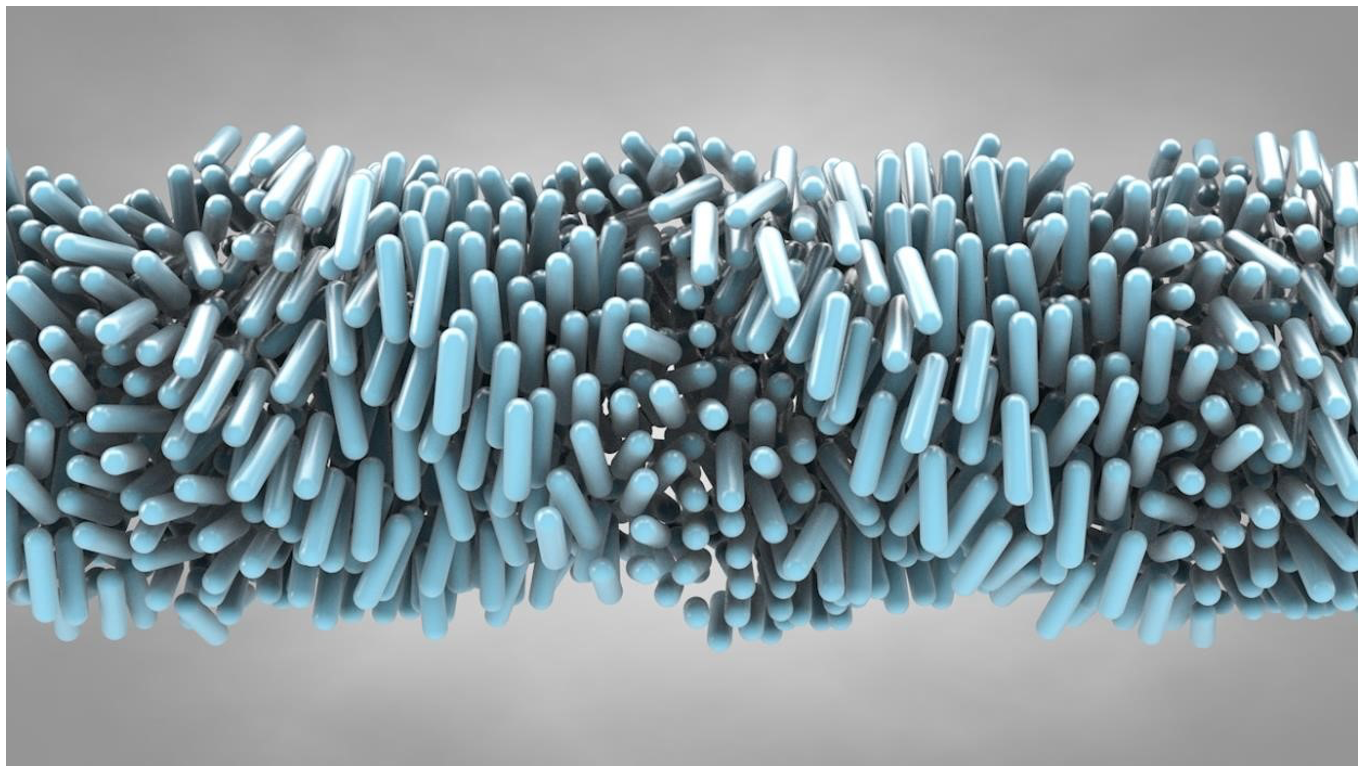
Chiral Nematic Liquid Crystal from beautifulchemestry.net
The most well-known use of liquid crystals is in display technology. Liquid crystal displays (LCDs) are found in many everyday devices, from televisions and computer monitors to smartphones and digital watches. Their ability to manipulate light makes them ideal for these applications, but the use of liquid crystals extends far beyond consumer electronics.
Liquid crystals are also used in advanced sensors, diagnostic tools, and high-performance materials like Kevlar. In the medical field, they help enable sensitive diagnostic devices capable of detecting diseases or bodily changes at early stages. Their optical properties are especially valuable for imaging technologies. In energy and environmental sectors, they contribute to applications such as oil recovery, where their responsive behavior enhances efficiency and precision.
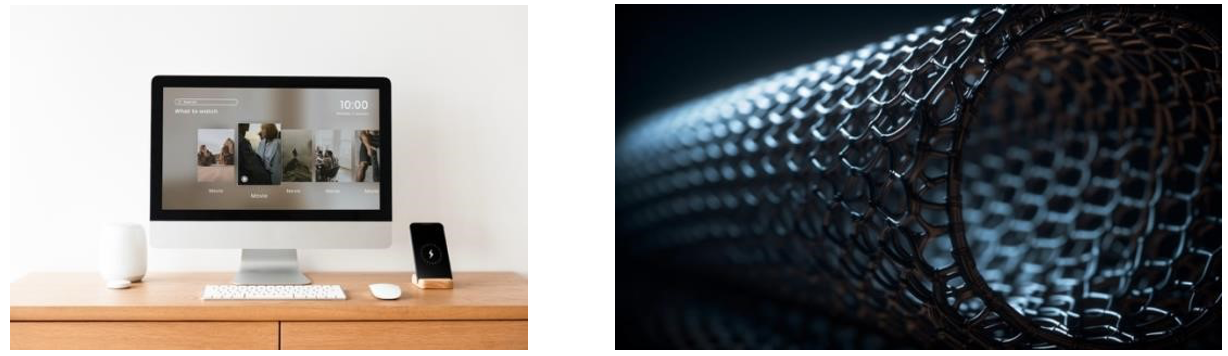
These wide-ranging applications make liquid crystals valuable to several industries, including pharmaceuticals, healthcare, aerospace, automotive, and materials science.
At the forefront of research in this evolving field is our team—the Theoretical Soft Matter & Fluid Mechanics Research Group at the University of Puerto Rico in Mayagüez, led by Professor Ubaldo M. Córdova-Figueroa. Our team has made significant strides in developing and applying liquid crystal technologies. One of our advances includes hybrid liquid crystal devices, engineered to fine-tune both optical and mechanical properties. These innovations are helping improve the performance of displays, sensors, and diagnostic tools.
One of the main challenges our team faces is modeling the anisotropic behavior of elongated molecules in liquid crystal droplets stabilized by surfactants to reduce coalescence. Classical approaches, such as explicit models, are often too computationally expensive, while continuum models fail to capture the microscale mechanisms necessary to understand interfacial behavior. Techniques like Molecular Dynamics or Dissipative Particle Dynamics offer greater precision but are often limited by short timescales. To address this, our team is working with a Stokesian Dynamics–like time framework, which has shown strong potential in capturing the relevant physics—even at the borderline of the colloidal scale.
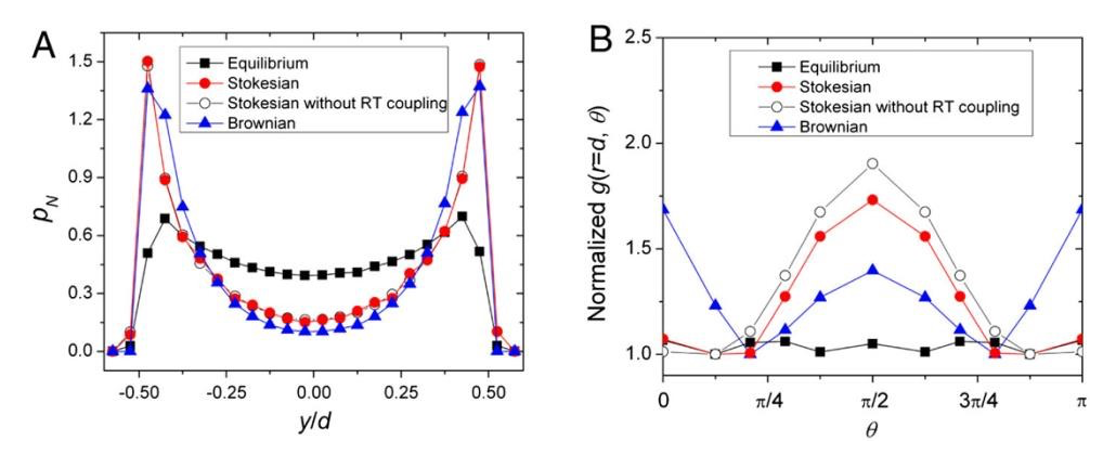
Stokesian Dynamic-like time framework from researchgate.net by Stuart A. Rice
But our work doesn’t stop there. We are also exploring how liquid crystals can be used to detect minute changes in temperature or pressure—an ability that can be particularly useful in automotive and aerospace safety systems. Imagine a system that could adapt or trigger a warning based on subtle environmental changes. This could help prevent accidents, improve performance, and make travel safer for everyone.
While these developments are promising, there is still much to learn about liquid crystals. Continued research is essential—not only to improve existing technologies but also to anticipate potential challenges or limitations that may arise with widespread adoption. Ongoing studies are needed to make these materials more effective, affordable, and adaptable for manufacturers and consumers.
Support is essential to advance this work. Whether by joining our research group, collaborating, or donating resources, there are many ways to contribute to this important effort. By supporting initiatives like ours, you are helping drive innovation that can benefit industries and communities worldwide.
To learn more or get involved, visit the Theoretical Soft Matter & Fluid Mechanics Research Group at: https://www.ucfcolloids.org/