

Student Research Spotlight: Lira C. Elías-Díaz
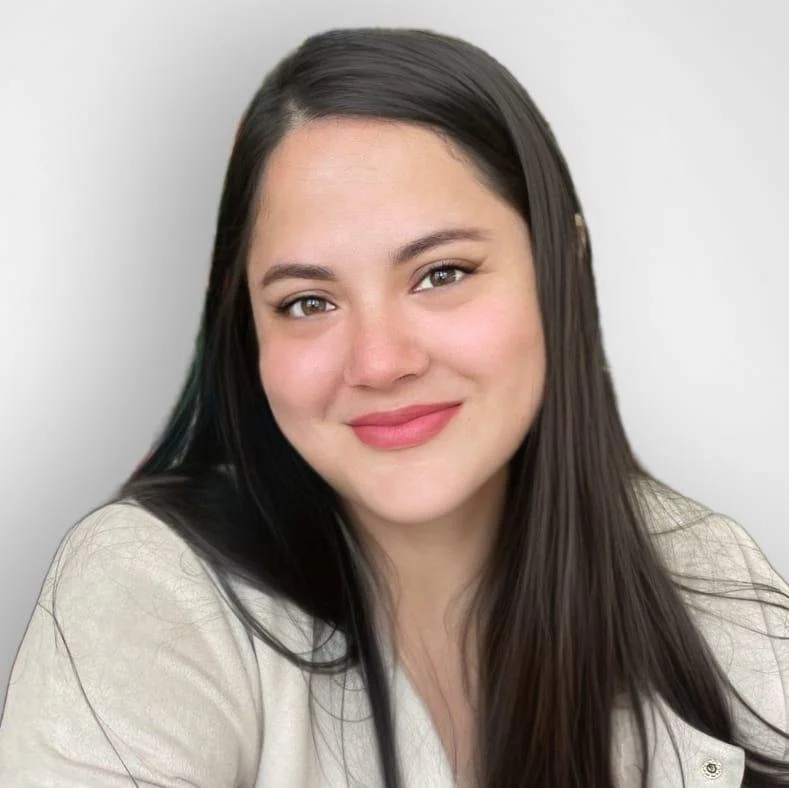
Lira C. Elías Díaz
M.S. Candidate, Mechanical Engineering
The future of smart materials, advanced cosmetics, and targeted drug delivery depends on scientists who can unravel the physics behind complex fluid systems. At the University of Puerto Rico at Mayagüez, Lira Elias-Díaz, a Master of Science student in Mechanical Engineering originally from Peru, is doing just that. Supported by UPRM’s collaborative research ecosystem, her work is pushing forward the fundamental understanding needed to design next-generation technologies—an impact made possible through programs and donors who champion student-driven discovery.
Research Focus
Working under the guidance of Dr. Ubaldo Cordova Figueroa in the Theoretical Soft Matter & Fluid Mechanics Research Group, Lira uses computational simulations to study how colloidal particles stabilize liquid crystal emulsions—droplets coated with microscopic stabilizers that respond to external stimuli.
She explains that liquid crystal emulsions are “highly relevant to society” because liquid crystals have “exceptional stimulus-responsive properties” used in medicine, cosmetics, and advanced smart materials. Her research aims to uncover the mechanisms that control their stability, offering insights that could improve how these materials are designed and used across industries.
Why This Research Matters
For Lira, this project represents the perfect balance of curiosity and impact. She describes her work as the intersection of “fundamental scientific inquiry and practical, real-world applications,” a combination that makes the challenge deeply meaningful.
“Understanding the stabilization mechanisms of liquid crystal emulsions is not only an intellectually stimulating problem, but also one with the potential to impact various industries, from medicine to advanced materials.”
What motivates her most is the process of “making sense of complex systems through modeling and analysis,” and discovering concepts that “can be generalized and applied to solve practical problems.”
Her findings could help researchers and companies achieve “better design and control” of emulsion-based systems, particularly in drug delivery and soft matter engineering. Even the possibility of contributing “to technologies that benefit society” fuels her commitment to the work.
Impact Beyond the Lab
Lira’s work has the potential to reshape how industries design and control emulsion-based technologies. Improvements in stability, performance, and responsiveness could translate to more effective drug delivery systems, advanced cosmetic formulations, and innovative soft matter materials.
Beyond its technical contributions, Lira sees her work as part of a broader mission:
“This potential to contribute—even in a small way—to the advancement of knowledge and to technologies that benefit society is a key motivation behind my work.”
A Journey of Growth
Research at this level demands adaptability and resilience. Lira notes that working with complex simulations and theoretical frameworks has expanded her problem-solving abilities. She shares that she has learned to “deal with uncertainty,” identify knowledge gaps, and make careful simplifications that still capture “the essential physics” of the system.
These experiences have shaped her as both a scientist and future engineer.
“Working through these challenges has helped me develop critical thinking, creativity, and discipline… These qualities are essential skills for my future career in research and engineering.”
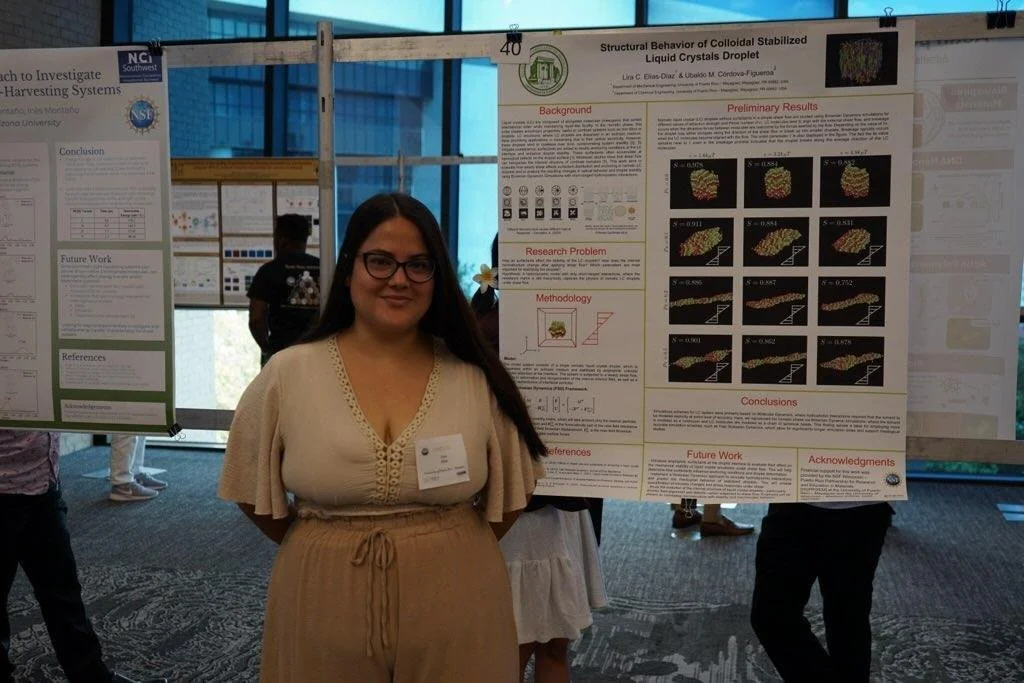
Collaboration & Support
Lira highlights the value of the collaborative networks that shape her research experience. She notes that discussions with PREM faculty and collaborators at the University of Wisconsin–Madison have been “very insightful,” helping her approach unfamiliar problems with greater confidence. These exchanges have given her “different perspectives on both experimental and theoretical work,” strengthening her ability to frame research questions and think more effectively across scientific approaches.
At UPRM, the resources available to her have been equally essential. She emphasizes that access to computational facilities, specialized courses, and a supportive research group have played a central role in her progress. This environment enables her to pursue “intellectually stimulating questions” while staying grounded in applications that matter, allowing her work to connect fundamental modeling with real-world impact.
Looking Ahead
Looking ahead, Lira hopes to offer “new insights into the mechanisms of emulsion stabilization” that can guide the improved design and performance of liquid crystal emulsions across the soft matter industry. Her upcoming work will focus on refining her models so they more accurately capture the physical interactions at play, as well as collaborating with experimentalists to validate and strengthen her simulation results.
At the heart of her goals is a commitment to bridging theory and application. She shares that her motivation lies in “bridging fundamental science with applications that benefit society,” and she is driven by the possibility of translating modeling breakthroughs into practical tools for innovation “in medicine, materials, and beyond.”
Words of Advice
Reflecting on her journey, Lira shares that the most rewarding part of her work has been “the intellectual challenge of understanding complex systems” and building models that truly capture their behavior. She encourages students interested in research to embrace both rigor and imagination, noting that…
“creativity, when supported by a strong foundation in your field, will… empower you to address meaningful questions with confidence and rigor.”
Professionally, her research has strengthened her ability to think critically, maintain a disciplined approach to scientific inquiry, and appreciate the broader impact of research in advancing technology. She sees these skills as essential not only for academic success, but also for contributing meaningfully to the scientific community and to the development of innovative solutions that benefit society.