

Postdoctoral Fellow Spotlight: Birendra Ale Magar
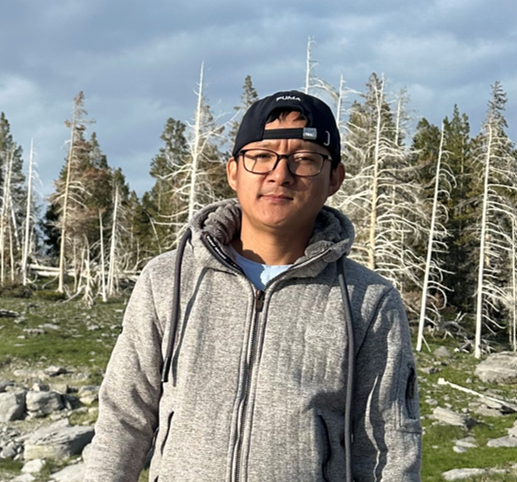
Birendra Ale Magar Puwar
Postdoctoral Fellow, UPRM
When it comes to groundbreaking scientific research, sometimes the most powerful discoveries start at the microscopic level. For Birendra Ale Magar, a postdoctoral researcher in the Department of Chemical Engineering at the University of Puerto Rico at Mayagüez (UPRM), the tiny world of Janus particles is opening big possibilities—from advanced drug delivery systems to innovations in nanomedicine, cosmetics, and beyond.
Originally from Nepal, Birendra earned both his master’s and Ph.D. in materials science from New Mexico State University (NMSU). At UPRM, he works under the mentorship of Dr. Ubaldo M. Cordova-Figueroa as part of the Theoretical Soft Matter & Fluid Mechanics research group. His work focuses on understanding the breakage dynamics of amphiphilic Janus particle (JP) aggregates under shear flow—a fundamental question with wide-reaching implications.
"My research is important to me because it addresses fundamental questions with direct relevance to applications across diverse fields such as materials science, medicine, environmental science, and catalysis," Birendra explains. "I am particularly motivated by the opportunity to contribute to scientific discoveries that not only advance our understanding but also have the potential to impact society in meaningful ways."
Exploring the Breakage Dynamics of Janus Particles
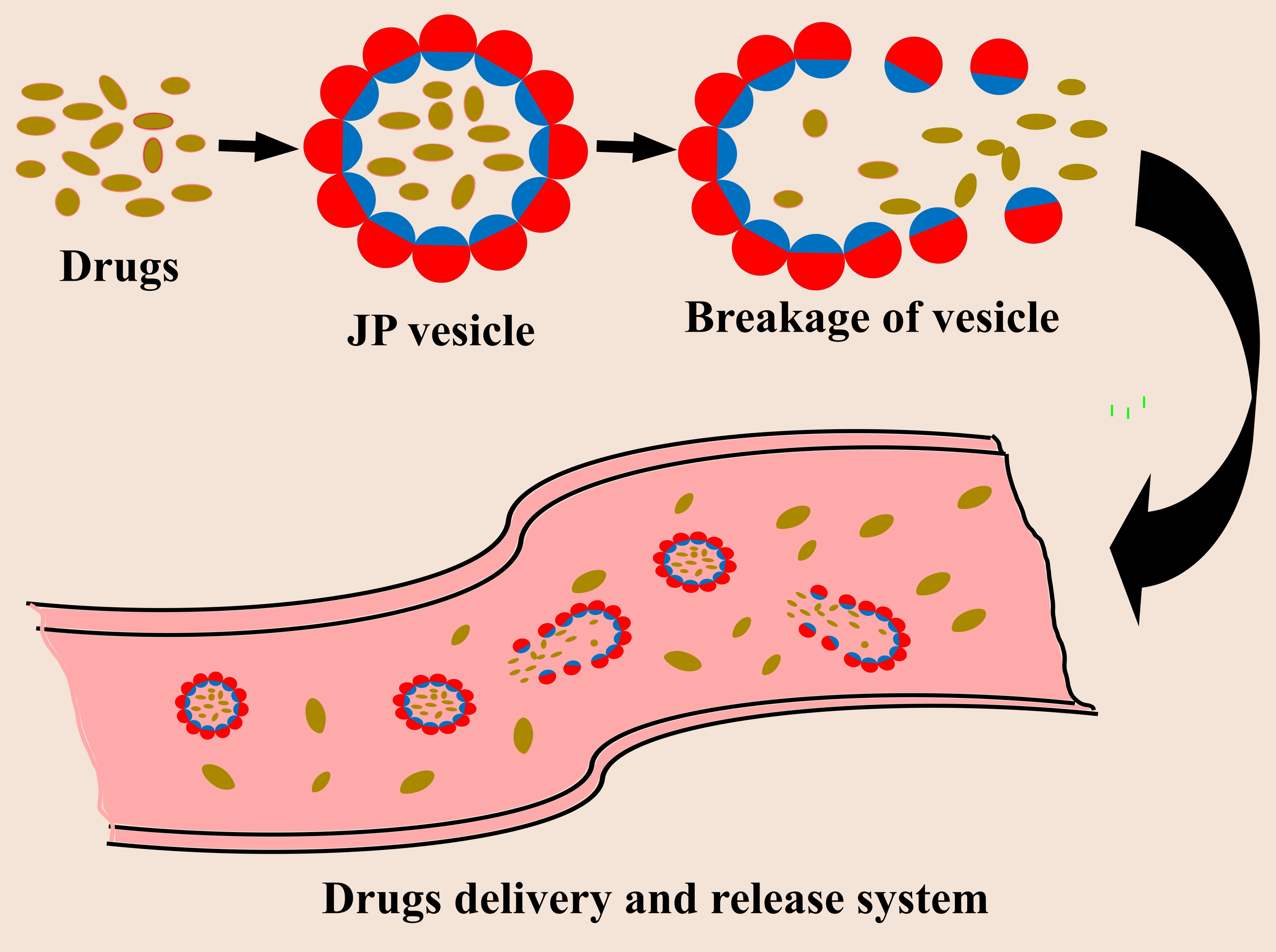
Janus particles are unique nanoparticles with two chemically distinct sides—one hydrophilic (water-loving) and the other hydrophobic (water-repelling). This duality allows them to self-assemble into complex structures, much like soap molecules forming bubbles or micelles. Birendra studies how these aggregates behave and eventually break apart when subjected to forces like shear flow—similar to the stresses fluids experience when stirred or pumped.
“This area fascinates me because it lies at the intersection of soft matter physics, fluid dynamics, and materials science,” says Birendra. His role includes developing computational models and simulations to understand how particle geometry, interactions, and flow strength affect breakage. His aim is to “bridge the gap between microscopic behavior and macroscopic properties, helping to inform the design of more robust and tunable self-assembled systems.”
From Fundamental Science to Real-World Impact
The implications of this work span multiple industries. "The potential real-world applications of my research are diverse and impactful. By understanding how amphiphilic Janus particle (JP) aggregates break apart under shear flow, we can better design materials for use in drug delivery, emulsification, and nanomedicine, where control over particle stability and release mechanisms is critical," Birendra says. "For example, in targeted drug delivery, it’s crucial for carrier particles to remain stable in circulation but disassemble in response to specific physiological triggers—such as flow-induced stress near a tumor site. Our research provides insight into how such controlled breakage can be engineered."
But the impact doesn’t end with medicine. "Beyond medical applications, this work also informs industries such as cosmetics, food processing, and materials manufacturing, where emulsions and colloidal stability play a vital role. Amphiphilic JPs offer tunable interfaces for such systems, and understanding their behavior under flow enhances their utility in real-world processes like mixing, transport, or spraying."
Birendra’s main contributions lie in developing computational models and simulations that link the microscopic behavior of particle assemblies to their large-scale performance. One milestone he’s particularly proud of is “developing a quantitative framework that links microscopic particle interactions with macroscopic breakage behavior, allowing us to predict critical shear conditions for aggregate rupture.” This achievement required combining theoretical modeling with extensive simulations and provides a valuable tool for designing more reliable JP-based systems.
Growth in Skills and Perspective
For Birendra, the postdoctoral experience has been as much about personal and professional growth as it has been about scientific discovery. Over the course of his research, he has built a strong foundation of technical expertise while sharpening the skills needed to thrive as an independent scientist.
"Through this research, I have significantly enhanced my computational and simulation skills, particularly in modeling complex colloidal systems under flow," he says. His work has required mastery of advanced simulation methods—skills that will serve him well whether in academia, national labs, or industry R&D. "I’ve developed expertise in particle-based simulation techniques, such as Brownian dynamics, and have become proficient in writing and optimizing custom code to simulate the behavior of amphiphilic Janus particle aggregates."
These technical abilities are complemented by his analytical and communication skills. "I’ve strengthened my data analysis and visualization skills, allowing me to extract meaningful physical insights from large simulation datasets,"Birendra explains. This capability—to turn raw computational results into knowledge—has been critical to the progress of his work.
Beyond the lab, he has grown as a scientific communicator and strategist. "I have contributed to the writing of research proposals and fellowship applications, which has taught me how to articulate compelling research goals, design feasible project plans, and highlight broader impacts—skills that are essential for securing funding and advancing an independent research career."
This holistic development has also shaped his long-term trajectory. "This experience has played a pivotal role in shaping my future goals. It has reinforced my interest in computational materials science and soft matter physics, and I am now committed to pursuing a long-term academic or research-focused career in this field."
His work has been supported by UPRM’s High Performance Computing Facility (HPCF), which provides the computational power for large-scale simulations, and by collaborations with both graduate and undergraduate students. Mentoring has been a particularly rewarding part of the journey: “These collaborations have… fostered a dynamic, team-based environment,” he says, adding that guiding students has strengthened his own understanding.
Looking Ahead
Birendra’s research journey is far from over. Building on his current findings, he aims to expand his computational models to explore how a wider variety of environmental conditions and particle properties influence the stability and breakage of amphiphilic Janus particle aggregates. "The next steps in my research involve extending our current models to explore how different types of external forces and environmental conditions—such as cluster in ABP, or varying particle chemistries—affect the stability and breakage behavior of amphiphilic Janus particle aggregates," he explains.
He also sees significant potential in expanding the reach of his work. "I also plan to investigate scaling relationships and predictive frameworks that can be generalized across particle systems and flow regimes, making our findings applicable to a broader class of soft matter systems," he says.
Looking further ahead, Birendra’s vision extends beyond pure science. "In the long run, I hope my work will contribute to a deeper, more predictive understanding of colloidal and self-assembled systems under flow, which is a critical challenge in both fundamental science and many industrial applications. By bridging particle-scale behavior with system-scale performance, I aim to inform the design of smarter, more robust materials for use in fields like targeted drug delivery, advanced coatings, and functional emulsions."
His ultimate goal is to help create a world where researchers and engineers can design, test, and refine advanced materials virtually—dramatically accelerating innovation while reducing costs across sectors.
Advice for Aspiring Researchers
Looking back on his postdoctoral experience, Birendra reflects not only on the technical milestones but also on the personal growth that comes from navigating the challenges of high-level research. "The most fulfilling part of my postdoctoral journey has been the opportunity to dive deeply into a challenging and intellectually rich problem, while also contributing to a field that has real-world relevance," he shares.
His advice for emerging scientists is grounded in both perseverance and purpose. "Stay curious and resilient. Research often involves long periods of trial and error, but those moments of discovery—when your hard work leads to new insight—are deeply satisfying." He emphasizes the importance of asking questions, no matter how simple they may seem, and of seeking out collaborations that can spark new ideas and broaden your expertise.
Birendra also encourages early-career researchers to think beyond their immediate field and encourages them to build strong computational, analytical, and communication skills as they will will serve well in any direction they pursue.
Above all, he urges researchers to align their work with their passions.
“Choose problems that genuinely excite you,” he says. “Passion and persistence are what sustain meaningful research”