

Student Spotlight: Luis R. Pérez Marcos
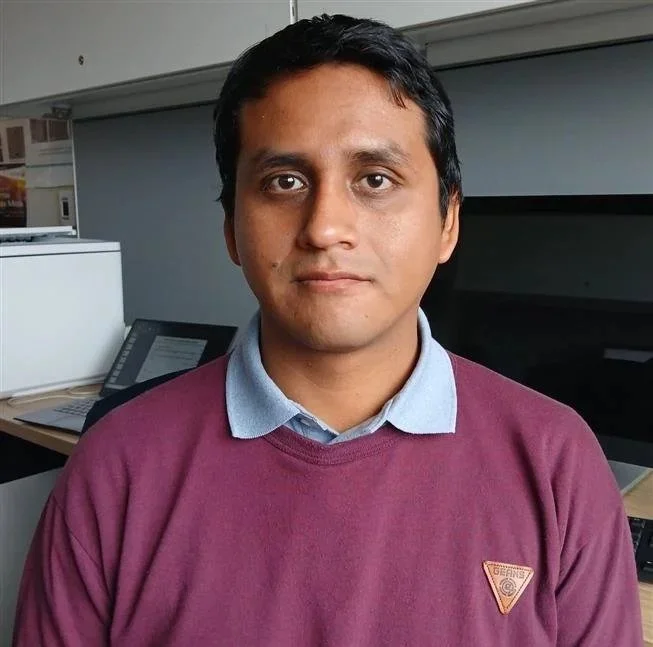
Luis Pérez Marcos
MS Student, Mechanical Engineering
Advancing technology requires more than creativity—it requires a deep understanding of the fundamental mechanisms that govern our world. At the University of Puerto Rico at Mayagüez (UPRM), graduate student Luis R. Pérez Marcos is doing just that, using computational simulations to unravel the mysteries of magnetic particle suspensions. His work not only expands scientific knowledge but also lays the groundwork for future technologies that could transform industries.
Luis is a second-year master’s student in the Department of Mechanical Engineering, working under the guidance of Dr. Ubaldo M. Córdova-Figueroa in the Theoretical Soft Matter & Fluid Mechanics Research Group. For him, research is more than a career step—it’s a passion. “My research is important to me because it deepens my interest in scientific topics and enables collaboration and exchange of ideas with other researchers, fostering my continuous learning,” he explained.
Exploring the Hidden Behaviors of Magnetic Suspensions
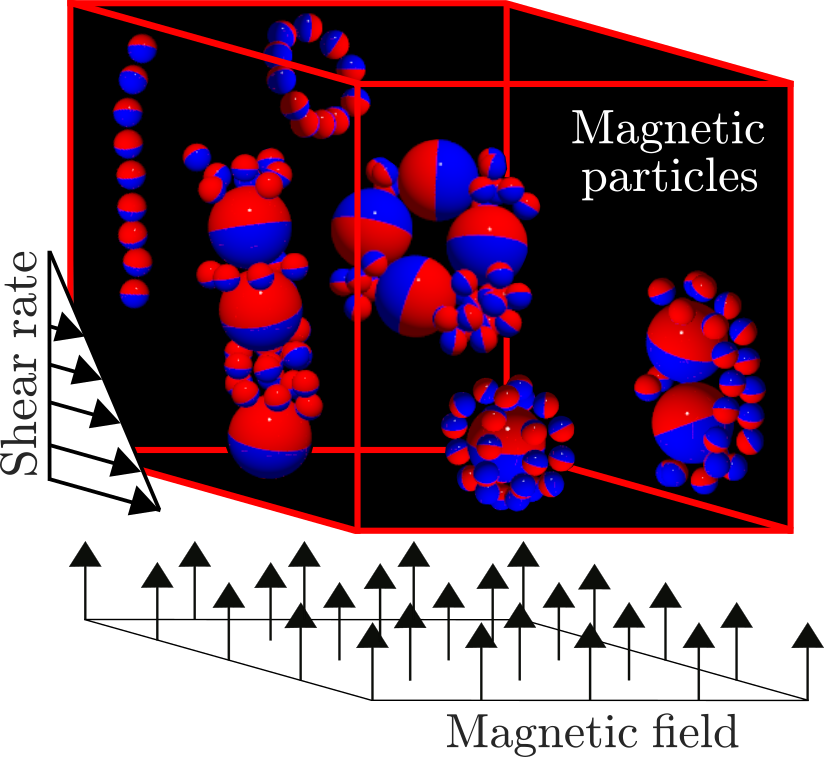
Luis’s research focuses on the computational modeling of magnetic particles suspended in fluids. By simulating particle–particle and particle–environment interactions, he seeks to understand how microscopic features lead to large-scale behaviors. “The focus of my research project is the use of computational simulations of magnetic particle suspensions to understand how and why particle–particle and particle–environment interactions give rise to distinct macroscopic behaviors, which can be harnessed for a variety of applications,” Luis said.
This work has broad implications. Magnetic suspensions are already used in technologies ranging from automotive systems to medical devices, but their behavior remains difficult to predict. Luis’s findings could help develop more accurate models, enabling engineers to design better-performing, more reliable applications.
Building Knowledge for Future Innovation
Luis’s early results are promising. “My initial studies on magnetic suspensions showed that simple features, like particle size variations and interaction strengths, can significantly impact microstructure formation and, in turn, macroscopic behavior,” he shared. These insights highlight how even small details can play an outsized role in technological performance.
Beyond technical results, Luis has grown both as a scientist and a communicator. “I have gained a solid understanding of the role and significance of simulation studies in advancing scientific knowledge… On a personal level, this process has helped me improve how I communicate my research ideas and results,” he reflected.
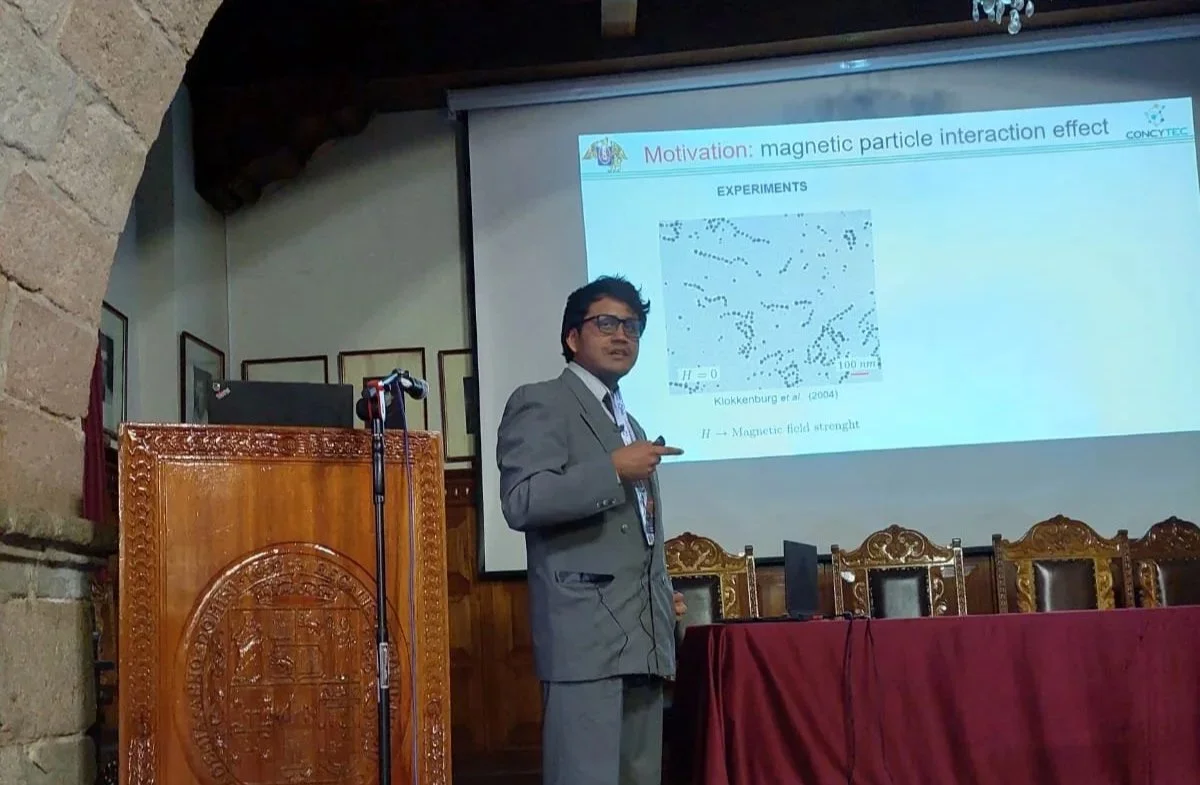
His efforts have already been recognized: Luis has presented at four conferences, published two papers, and earned a fellowship that supports his ongoing research.
Looking Ahead
The next step in his work is to incorporate greater complexity into his models, bringing simulations closer to real-world systems. “The advancement of our society increasingly depends on a deeper understanding of physical mechanisms to harness them in more complex applications,” he explained. His long-term goal is to contribute to the development of predictive models that will guide new technologies and applications.
For Luis, the journey itself has been rewarding: “One of the most rewarding has been the publication and submission of research papers, which reflect the hard work I have dedicated over the past few years. Additionally, being able to present my work at conferences as a result of these efforts has been highly fulfilling.”
Advice for Future Researchers
Luis knows firsthand that research is both challenging and deeply rewarding. He encourages students to approach it with resilience, patience, and a long-term vision.
“Following a research path comes with its challenges. To face them, you should keep in mind two very important aspects. First, scientific knowledge is constantly evolving, so you must continually update and expand your background. Second, there will be moments when it feels like your research is not making progress, but you should never lose your motivation to contribute to science. The stress you may experience will be outweighed by the satisfaction of the final results and the impact of your hard work.”
His advice highlights an important reality of the research journey: progress isn’t always linear, but each step—whether a breakthrough or a setback—adds to the bigger picture of discovery. Luis reminds aspiring scientists that persistence is key, and that the knowledge gained, the skills developed, and the impact created are worth the effort.